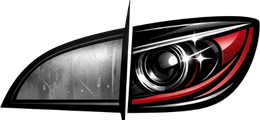
From June to September, St. Petersburg gets a storm most afternoons, and Florida law is blunt about what that means: wipers on, headlights on. Rainy season is when cloudy lenses go from cosmetic annoyance to daily hazard, and here is why.
What does Florida law require in rain?
Florida Statute 316.217 requires headlights not just from sunset to sunrise but during any rain, smoke, or fog. Every one of those 3 pm summer downpours on 4th Street N or Gulf Boulevard is a legal headlight event. If your lenses are heavily oxidized, you are running your worst equipment during the exact conditions the statute exists for, dozens of times a season.
Why is glare worse in the rain?
Water multiplies scatter. A clear lens throws a focused beam pattern with a sharp cutoff. An oxidized lens already scatters light in every direction, and rain adds two more layers: a film of water on your lens diffusing the beam again, and a wet road surface bouncing every stray ray back up. The result is the summer driving experience every Floridian knows, a glowing gray wall where the road should be, while oncoming drivers squint at the glare your scattered beam sends their way.
That last part matters more than most people realize. Hazy lenses do not just light your road worse, they blind other drivers more, because light that should point down and right sprays everywhere instead.
Why does rainy season also accelerate the damage?
Summer is peak UV and peak heat. The same months that demand the most from your headlights are the months that degrade them fastest: UV index at its highest, lens surfaces heating and cooling daily, and afternoon storms depositing mineral and salt film that bakes on in the sun an hour later. Lenses that looked passable in March are often visibly yellow by September.
What is the fix before the next storm cycle?
A real restoration, done before the damage deepens. We remove the oxidized layer entirely with grit matched wet sanding, restore optical clarity, and seal the lens with a ceramic coating that chemically bonds to the polycarbonate, so next summer’s UV hits the barrier instead of the plastic. It takes about an hour in your driveway, we work around storm windows because we are open 24/7, and every job carries the Perfectly Clear or It’s Free guarantee.