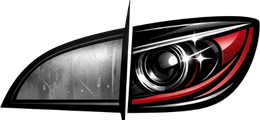
Yes, you can get a ticket for dim headlights in Florida even when both bulbs work. Florida law does not just require headlights to turn on, it requires them to perform to a measurable standard, and heavy oxidation can put a lens below it. Here is what the statutes actually say and what they mean for a car that lives under St. Pete sun.
What performance does Florida law require?
Florida Statute 316.220 requires that low beams reveal a person at least 150 feet ahead, and high beams at 450 feet. The statute regulates light on the road, not bulbs in the housing. A heavily oxidized lens can scatter away enough of the beam that a car with brand new bulbs still fails the 150 foot standard. In the eyes of the law, that is defective equipment. An officer who notices weak, glowing headlights at a stop can write it as a nonmoving equipment violation.
When are you required to have them on?
More often than most drivers think. Florida Statute 316.217 requires headlights from sunset to sunrise, and any time rain, smoke, or fog requires your wipers. In a St. Petersburg summer, that second clause triggers nearly every afternoon. Between the daily storms and early winter sunsets, hazy lenses in this county are out of compliance on a regular schedule, not a rare one.
Does Florida have a vehicle inspection that cloudy headlights would fail?
No, and this trips up a lot of advice written for other states. Florida has no annual safety inspection, so there is no inspection to pass or fail. The enforcement mechanisms here are the two statutes above, on the road, plus one more that matters far more than any ticket.
The bigger risk: liability after a crash
An equipment citation costs money once. Degraded headlights after a night crash can cost much more. Beam performance is a documented factor in crash reconstruction. Say your low beams could not reveal a pedestrian at 150 feet. If the other side’s attorney can show your lenses were visibly oxidized, they will argue you knew your equipment was defective. Nobody buys headlight restoration hoping to win a lawsuit, but it is worth knowing what a $220 fix insures against.
How do you know if your lenses are below standard?
Look at them in daylight: yellowing, chalkiness, or a boiled look means significant scatter. Then trust your night experience. If lit road signs are clear but the road surface itself looks dim, your beam is going everywhere except forward.
The fix takes about an hour. Our full restoration removes the oxidized layer completely and bonds a ceramic UV barrier to the lens, returning the beam pattern the 150 foot standard assumes. We come to you anywhere in southern and central Pinellas, day or night, and if the result is not perfectly clear, you do not pay.